Manipulating Data in JMP: Using Tables > Split
One way to manipulate your data is to "split" a data table, or to separate the data values contained in one (or more) column(s) and place them into multiple new columns.
The Transpose platform lets you rotate a data set so the columns become the new rows and the rows become the columns.
Introduction A genome-wide association study (GWAS) is an approach that involves rapidly scanning genetic markers (or SNP or Single Nucleotide Polymorphism) across the complete sets of DNA (genomes) of many subjects to find genetic association with a particular phenotype or trait. Researchers use GWAS to identify genomic variants statistically associated with a particular trait. A GWAS is applied ...
Population studies are a fascinating subfield of genetics that focus on understanding genetic differences within and among populations to reveal a population’s genetic evolution. One of the key concepts that I focus on in this blog is examining population structure, in other words, analyzing genetic information across individuals originating from different parts of the world to see if JMP can cate...
You want to keep coding in JSL, but for a particular function, you know there's an easy way to write it in Python. So how do you create a JSL function that implements its functionality in Python?
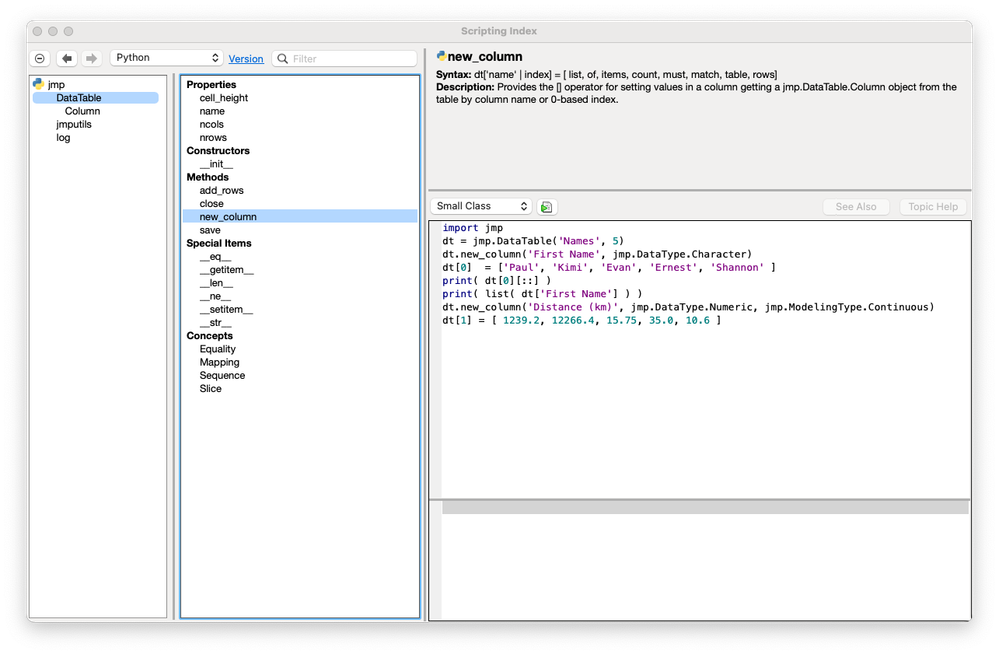
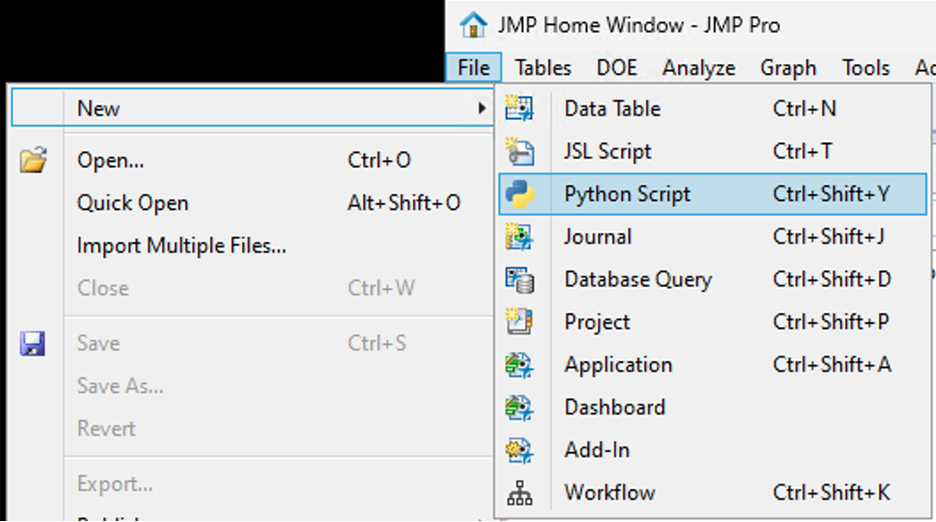
JMP Principal Systems Developer Paul Nelson spearheaded the effort to create a consistent, full-featured, integrated development environment for writing and executing Python scripts within JMP in JMP 18. The result? A more productive environment for Python developers that works immediately when installed, gives direct memory acces to Python data tables in a live environment, and an integrated Py...
JMP 18 introduces a lot of new capabilities, including revamped Python support, which allows users to directly access, modify, and create JMP data tables from Python. This is accomplished through the jmp.DataTable Python object. Keep reading to learn how to create a pandas.DataFrame from a JMP data table, as well as the reverse, a JMP data table from a pandas.DataFrame live and in-memory.
Applying a sample Platform Preset Making our own Platform Presets Managing your Platform Presets Exporting and sharing your Platform Presets Exporting presets to a file Creating an add-in with a bundle of Platform Presets Platform Presets pro tips Broadcasting Copy and paste platform settings Summing up I love efficiency, and one of the reasons I love JMP is that I can do so much in the software ...
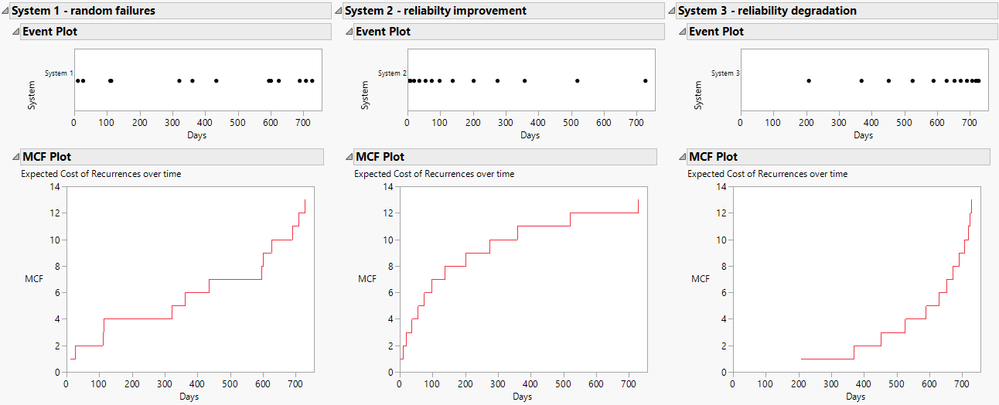
In component reliability, or non-repairable system reliability, we assume that after a component has failed, it is discarded and can’t be repaired. Lifetime of components is modeled using Weibull or lognormal distributions (among others), and the goal is to estimate the time that a given proportion of parts will have failed or the proportion of parts that will fail at a given time. In system re...
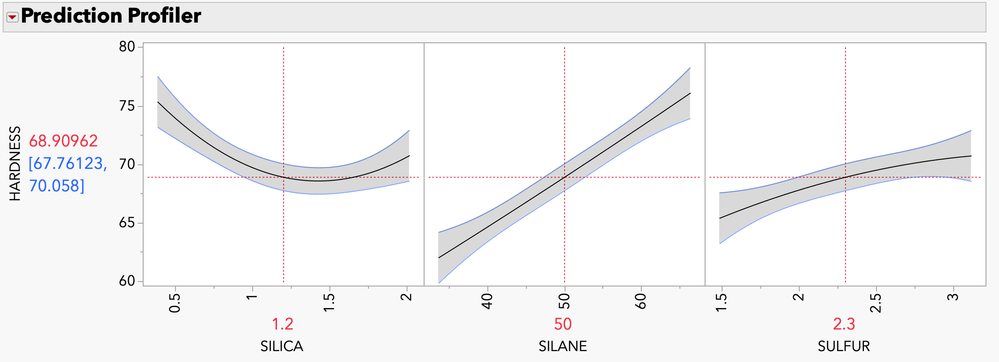
The Prediction Profiler has undergone many generations of improvements over the years, and even more features and functionality have been added in JMP 18.
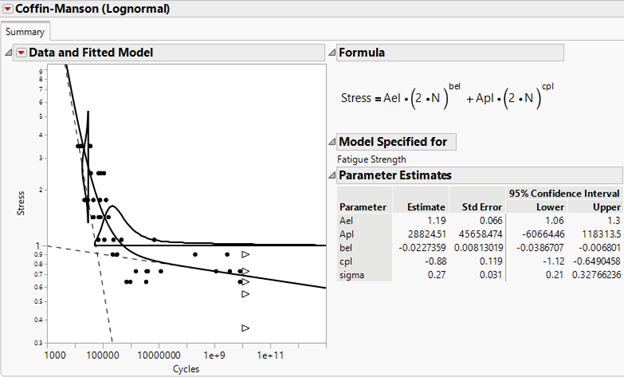
The reliability of particular parts is related to cyclic loads of stress and is determined by the stress level. Fatigue modeling is relevant for a whole host of products using metal, including bridges, springs, turbine blades, airplane wings, tooling devices, and any product made with metals and other materials subjected to tension, compression, shear, bending, or torsion. The relationship between...
JMP developers have designed all the model fits in the JMP Pro FDE platform to rely on basis function expansion, a method for capturing non-linear relationships using a set of independent functions. Why? Not all data contributing to a problem, or resulting from a process, are equal, such as functions, signals, spectra, or series defined over continuums like time, spatial location, and wavelengths....
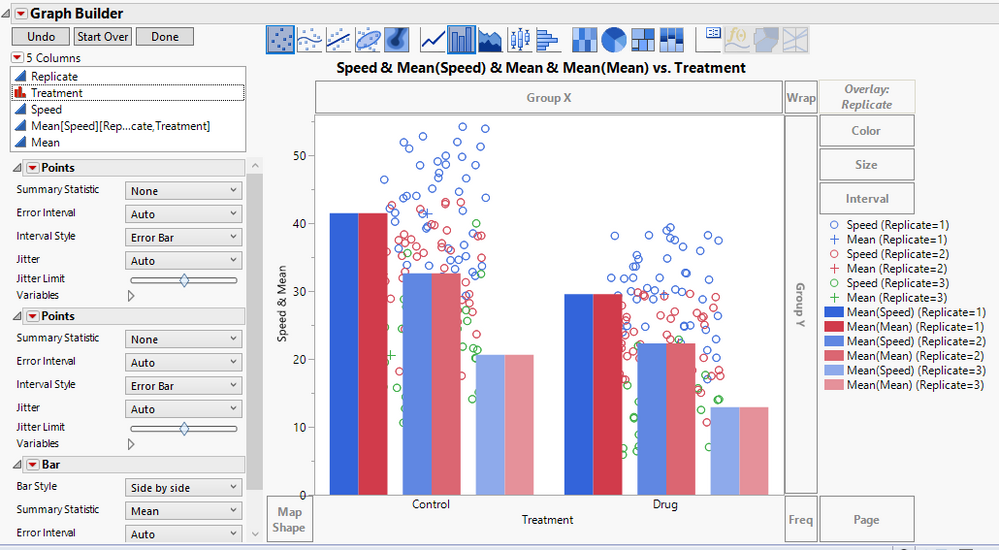
See how to reproduce a SuperPlot using JMP with an emphasis on presenting observation-level variability and experimental reproducibility simultaneously.
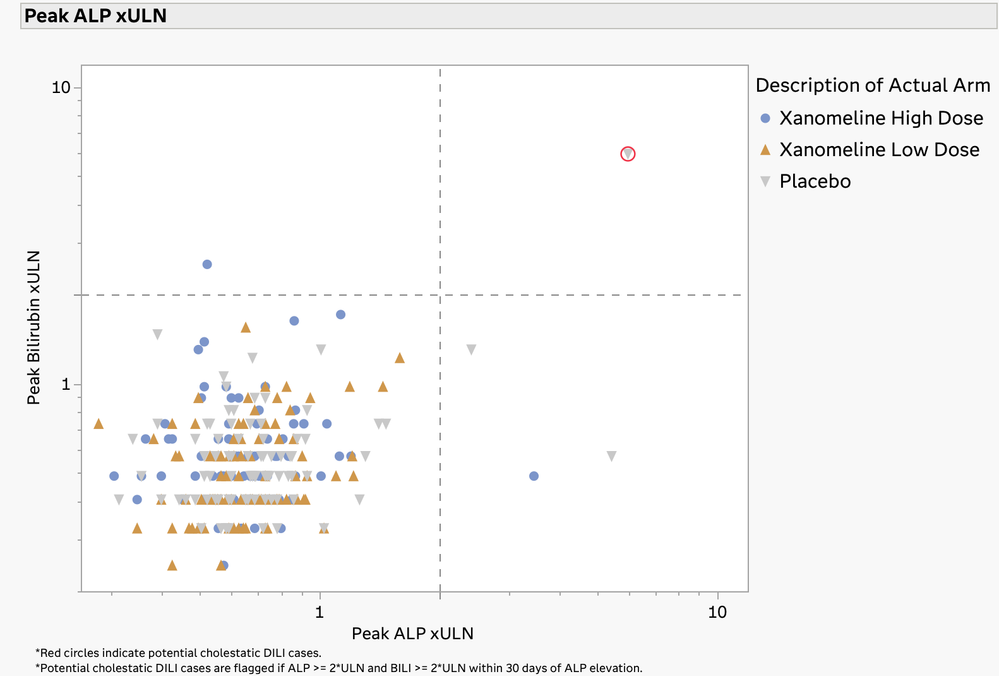
JMP Clinical 18 (planned for release March 2024) has several new and important features, including new reports, a new method for querying the study data, and a new clinical data mapping tool. In addition, a thorough review and overhaul of product performance provides greater speed for loading and analyzing studies. JMP Clinical is a focused and specialized product for clinical trial data review. ...
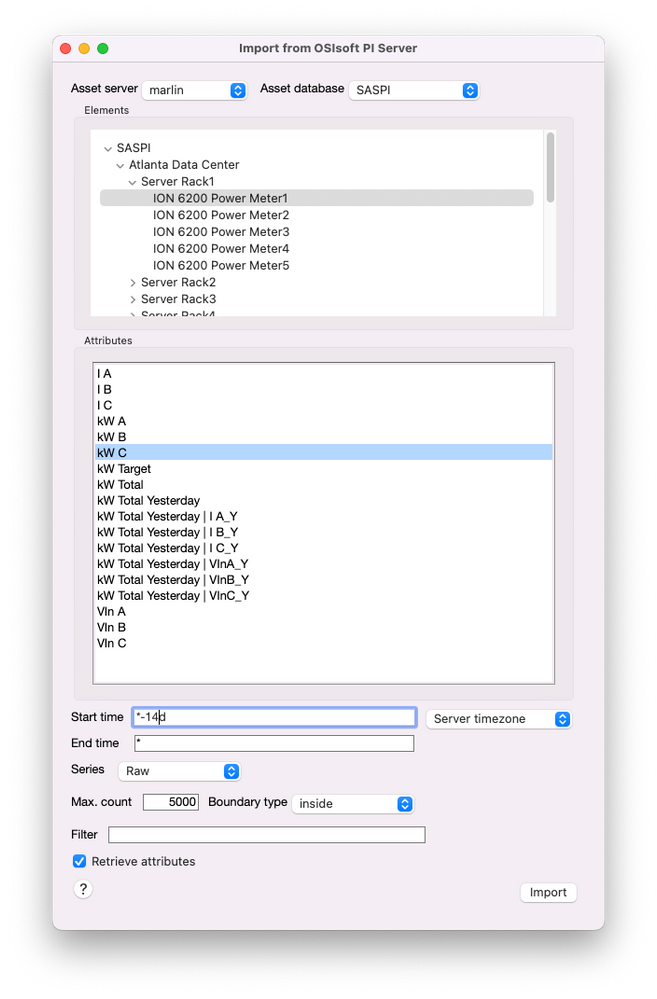
JMP 17 includes a new data connector that allows users to connect to an OSIsoft PI server. Users can find this capability from File -> Database -> Import from OSIsoft PI server…
Search JMP is a contextual search of JMP features available to you from the current window. It's new in JMP 17.
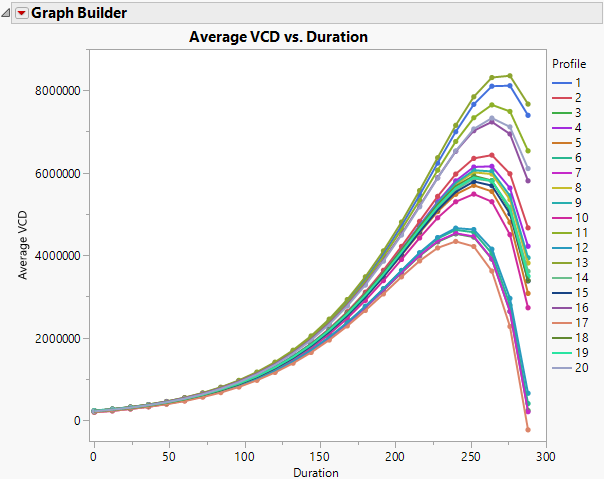
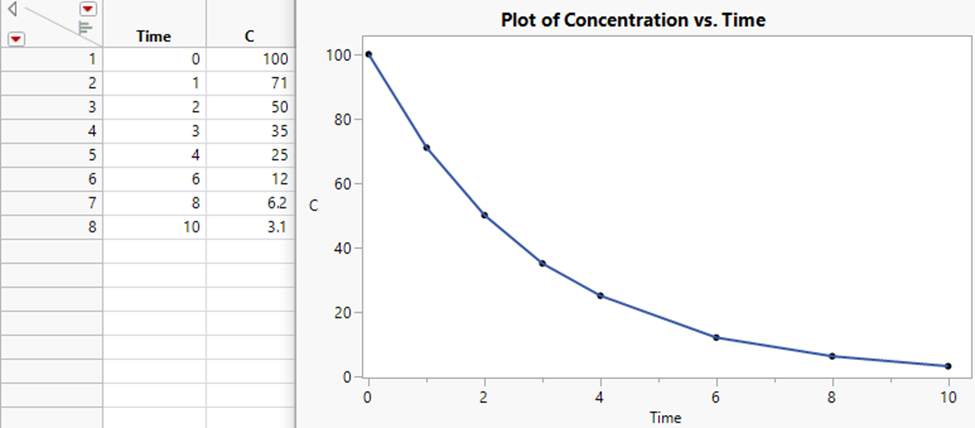
A common question users ask is how to use JMP to find the area under a curve. In this blog post, I’ll review a few possible ways to do so in JMP.
JMP Pro 17 incorporates a significant change to how genomic data analysis is performed in JMP. JMP previously relied on a backend connection to SAS to perform primary data import and computations using customized user interface dialogs and output dashboards in JMP. The new release allows you to do this work directly in JMP Pro and no longer uses SAS or additional customizations. Distinguished Rese...
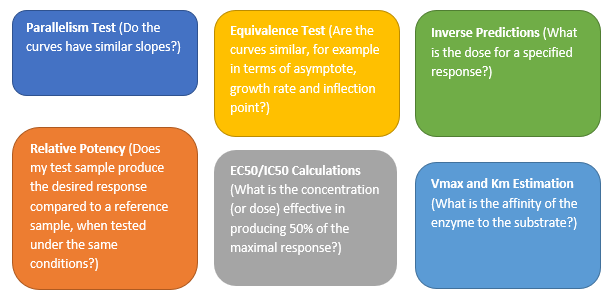
Different methodologies are used in Bioassay tests. In this blog I describe bioassays examples using JMP that are commonly used.
JMP 18 has a new way to integrate with Python. The JMP 18 installation comes with an independent Python environment designed to be used with JMP. In addition, JMP now has a native Python editor and Python packages specific to JMP. This JMP Python environment has enhanced connectivity and interaction with JMP, which means using Python with JMP has never been easier. In this series of blog posts, I ...