JMP Pro for Genomics and Wide Data: A New Resource
In this figure, the t-Distributed Stochastic Neighbor Embedding (t-SNE) method clusters genes so that those genes that are structurally or functionally related can be more easily identified.

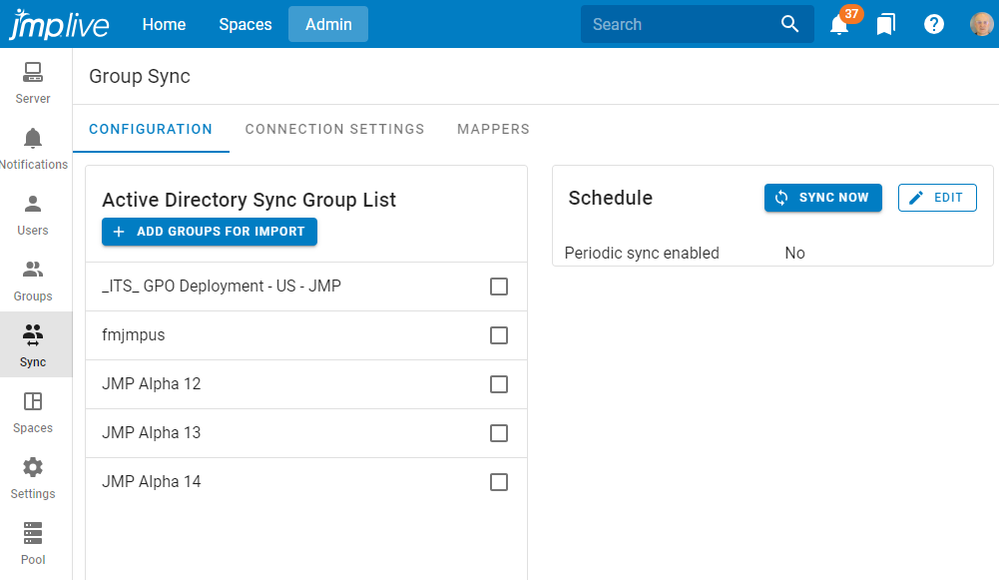
Organizations rely on JMP Live because it enriches how discoveries are shared, how collaboration happens, and how data-driven decisions are made. JMP Live 18 introduces new capabilities that further improve efficiency for seamless knowledge sharing. From simplified user management to a streamlined customer/supplier model, and more, JMP Live 18 empowers scientists and engineers – and those who coll...
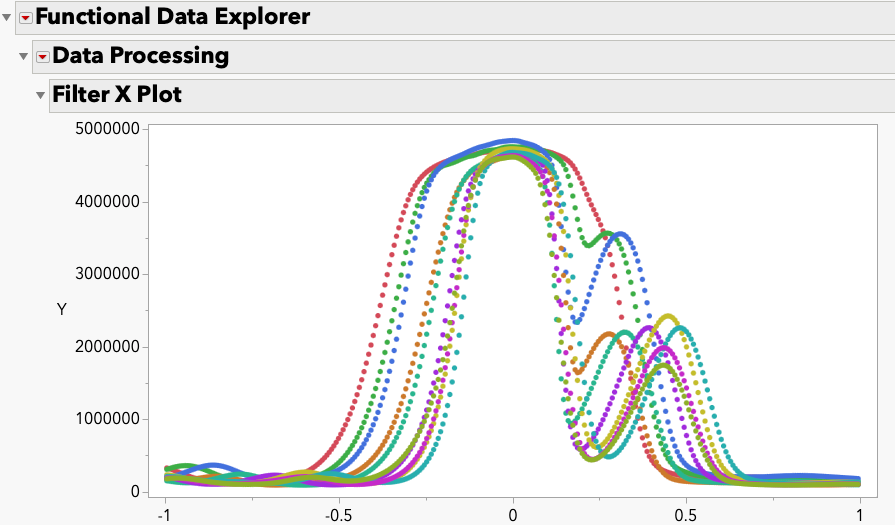
There are quite a few great new capabilities in JMP Pro 18: updates to GLMM; more genomics capabilities; mixed models and response screening for big data; and updates to SEM, to name a few. But if I had to pick just one new feature that I’m especially excited about, it would be the Peak Finding capability in the Functional Data Explorer (FDE).
Why is Peak Finding important?
Many companies have chr...
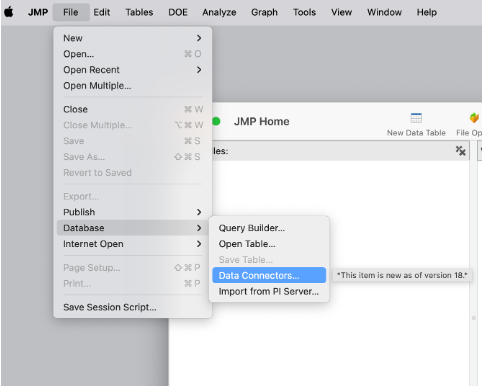
Data access is fundamental. It’s often the first step in the analytic workflow, but it's frequently a source of frustration for scientists and engineers who struggle to access the data they need to answer their specific analytic questions. While JMP has long provided useful capabilities for retrieving data from files, databases, and other data sources, the release of JMP 18 introduces a significan...
Control Chart Builder is an interactive workspace which allows you to monitor process variation. This blog post details the new features introduced for Control Chart Builder in JMP 16.
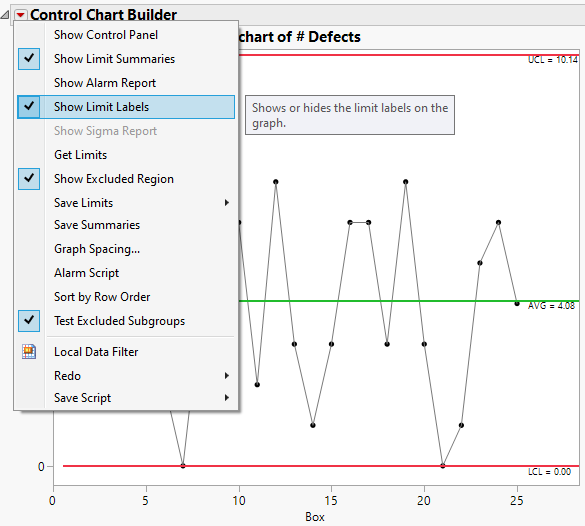
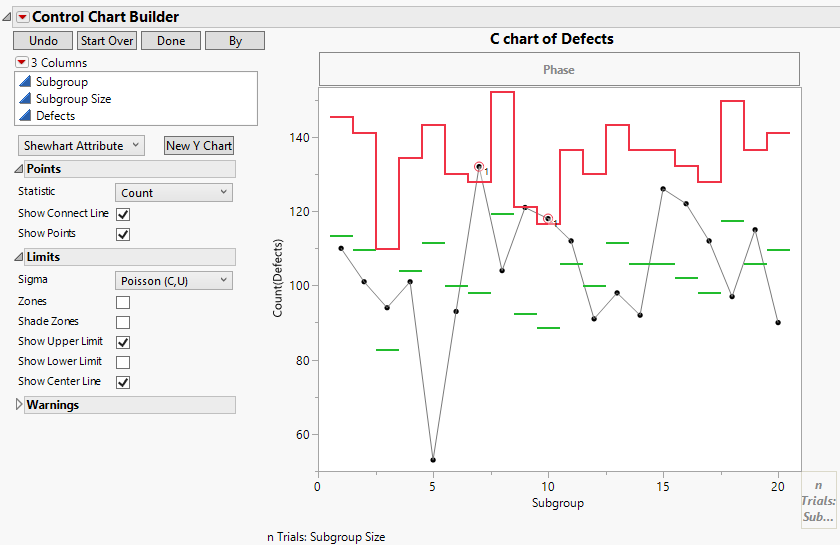
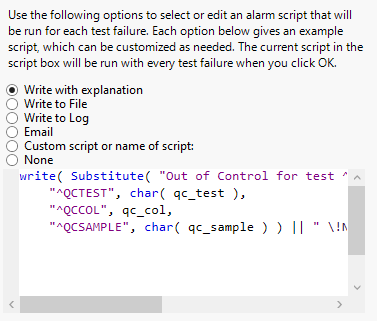
Control Chart Builder is an interactive workspace which allows you monitor process variation. This blog post details the new features introduced for Control Chart Builder in JMP 16 that specifically deal with tests and alarms. To see other new Control Chart Builder features that do not deal with tests or alarms, please see my previous blog post “JMP 16 new features in Control Chart Builder – part...
Cumulative Sum (CUSUM) control charts enable you to detect small shifts in a process. They are useful in detecting shifts that occur over time, such as a gradual drift, and that are not necessarily accompanied by a sudden shift. This blog post details the new features for CUSUM Control Charts that are available in JMP 16.
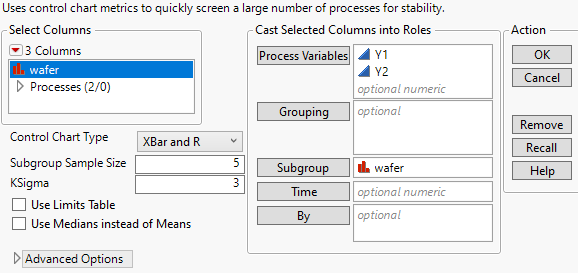
Process Screening enables you to explore a large number of processes across time. Several new features were added to this platform in JMP 16. This blog post details the new features for Process Screening that were introduced in JMP 16.
The first installment of our new Advocating for Analytics series.
Part two in our ongoing series Advocating for Analytics.
Advocating for Analytics: W. L. Gore W. L. Gore's John Szarka says the Early Adopter program lets users have a voice in the development process.
Advocating for analytics at PCC Structurals
Advocating for analytics at W. L. Gore & Associates
A Q&A on mature analytics cultures, mentorship and more
The best opportunity all conference long to engage with industry peers and JMP staff around our shared enthusiasm for predictive modeling.
Suppose you are making parts, and some small percentage of those parts are susceptible to an early life "defect" that causes them to fail, while the rest of the population doesn't have the defect and will never fail because if it.
Rational subgrouping is the process of organizing the data into groups that were produced under the same/similar operating conditions. Several new subgrouping features were added to the Process Screening platform in JMP 16.1 to make this analysis more flexible and user-friendly. You can now specify multiple subgroup columns. Individual and Moving Range charts with a subgroup role now create a det...
A Q&A on developing analytics thought leadership
When traveling by train from Paris to Geneva, you have two options: high-speed train or regional train. The high-speed train will get you there in 3 hours and 5 minutes. The regional train takes 8 hours and 35 minutes. While the high-speed train is the fastest and most comfortable, the regional train does not require you to reserve a seat and allows you to stop in beautiful cities along the way li...
JMP for Mixed Models by Hummel and Claassen