What is ghost data?
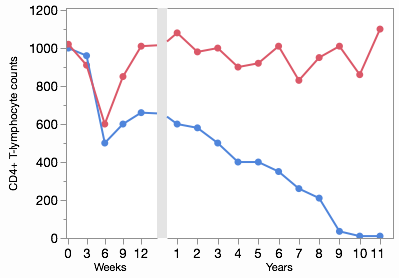
Ghost data is any data that is not there, and there's no need to be afraid of it

Richard Wiseman shares findings from his research on luck.
I’ve been asked how to make a graph with an axis break. Before I show how, I want to ask “Why?”
Researcher Vic Strecher discusses why having a purpose in life matters for your health and well-being.
What makes decision making by teams problematic? And how can we improve it?
How do you use JMP in your organization? Has JMP helped you find important information in your data?
Data preparation is as important as analysis, says data mining expert Dick De Veaux.
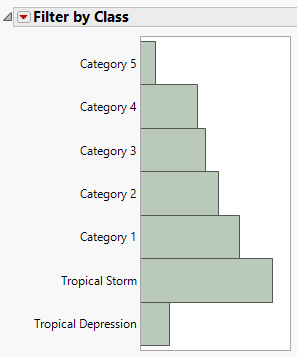
A dashboard can integrate multiple analytical platforms and use filters to guide data exploration.
There are two mistakes survey analysts commonly make.
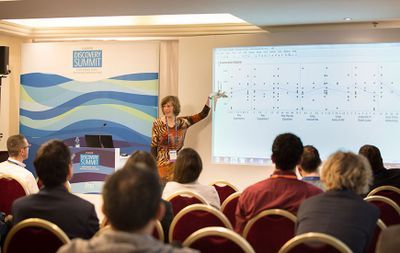
The biggest addition to Graph Builder in JMP 13 is a new element for parallel coordinates plots.
Mike Adams discusses the best (and worst) things in stats education
Here, we show how to optimize process parameters of a product.
Under QbD, statistically designed experiments are used to efficiently and effectively investigate how process and product factors affect critical quality attributes.
In this post, we look at considerations in planning a statistically designed experiment, collecting the data, carrying out the statistical analysis, and drawing practical conclusions in the QbD context.
A typical response surface study begins with a screening experiment to identify the most important factors.
Split-plot experiments are experiments with hard-to-change factors that are difficult to randomize and can only be applied at the block level.
Development of measurement or analytic methods parallels the development of drug products.
A plethora of websites, magazines and “NFL experts” have predictions for the coming NFL season.
In an unusual industry-government partnership, the FDA, with support from major pharmaceutical companies, launched a Quality by Design (QbD) initiative
Editor's Note: This post was written by @eric_cai, a chemist and statistician who also blogs at The Chemical Statistician. Follow Eric on Twitter @chemstateric. One of the most common tasks in chemistry is to determine the concentration of a chemical in an aqueous solution (i.e., the chemical is dissolved in water, with other chemicals possibly in the solution). A common way to accomplish this t...